A trucking quote can look profitable until the truck runs empty to pickup, waits three hours at the dock and needs a second delivery attempt. By the time those details reach the invoice, the commercial decision has already been made.
That is why the trucking industry trends worth watching in 2027 reach beyond the truck itself. Market conditions, operating costs, driver time and digital workflows all affect which freight a business can accept, how confidently it can price the work and whether the load delivers the expected return.
This outlook focuses primarily on North American trucking, with practical implications for fleets, brokers and road freight teams. The ten trends below are Freitt's assessment of where current developments could lead in 2027, paired with steps businesses can take now.
Key takeaways
Build lane-level plans: a broader freight recovery will not create the same conditions for every route or equipment type.
Price the whole job, including empty miles, fuel, waiting time and agreed accessorials.
Use AI to prepare information and quote drafts, with people responsible for commercial decisions.
Connect the quote, appointment, delivery record and invoice so important details survive each handoff.
Evaluate autonomous and alternative-power trucks against specific routes, infrastructure and operating needs.
1. Trucking market recovery will reward lane-level decisions
A headline about improving freight demand does not tell a dispatcher whether a particular reload will be available on Friday. Equipment type, direction, seasonality and customer commitments still determine the practical capacity picture.
The divergence is visible in Truckstop and Bloomberg Intelligence's August 2026 survey release: brokers described stronger rates and tighter capacity, while carriers reported a more cautious market and financial pressure. It is a useful signal of uneven conditions, rather than a single forecast for every trucking business.
In 2027, review outbound and return legs together. Separate dry van, refrigerated and flatbed performance, and refresh quote validity when conditions change. A lane that works with a dependable backhaul may need a different price when the truck must return empty.
2. Cost discipline will matter even when rates improve
Higher revenue per mile does not automatically produce a healthier operation. A carrier must cover its own operating costs; a broker or forwarder must understand purchased transportation costs and the margin left after servicing the load.
ATRI's 2026 Operational Costs update reported an industry-average truck operating cost of $2.336 per mile for 2025, up 3.4% from the previous year. That is a benchmarking figure, not a recommended selling rate or a substitute for a fleet's own accounts.
Expect greater attention to contribution by lane and customer in 2027. For fleets, include empty mileage, driver time, maintenance, insurance and equipment costs in the analysis. For intermediaries, compare the accepted customer price with the actual carrier bill and additional service costs. Use those differences to improve the next quote.
3. AI will take on more of the work before a trucking quote
The most accessible AI use case for many road freight teams is administrative: reading a load request, gathering shipment details and preparing a reply. Those tasks recur whether the request arrives as a short email, a spreadsheet or an attachment buried in a forwarded thread.
The opportunity in 2027 is to turn that information into a checkable draft. The test is whether the workflow identifies the correct pickup, delivery, dates, equipment and pricing basis, and highlights what still needs a decision.
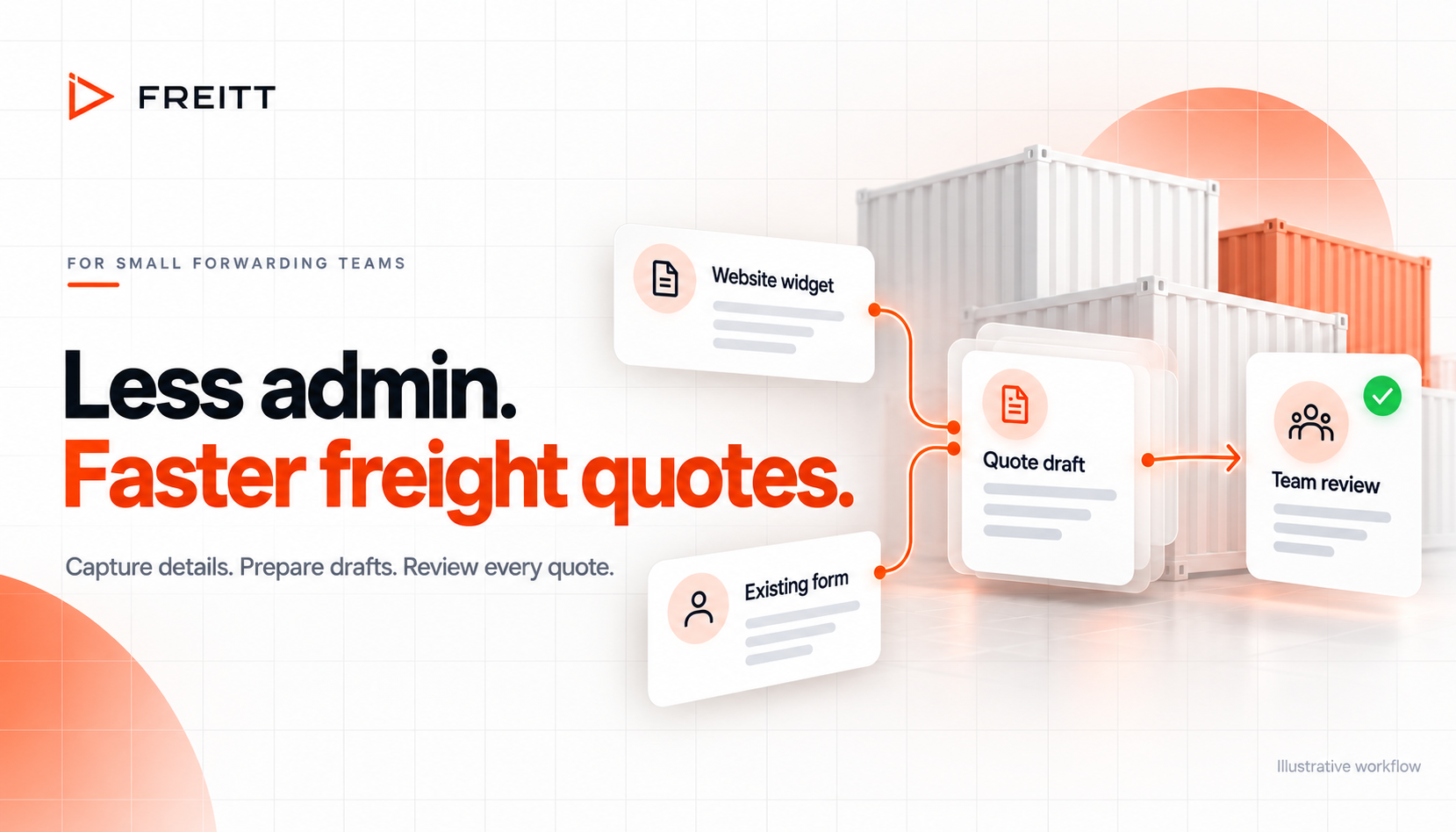
Freitt's email-to-quote workflow extracts shipment information from requests and attachments and flags uncertainty for review. Its quote drafting uses the team's own rates. A person remains responsible for reviewing and sending the customer response.
Start a pilot with repeatable loads and approved pricing. Include an ambiguous equipment request and an expired rate in the trial: how the system handles a problem matters as much as how it handles a routine job.
4. Fuel and accessorials will receive closer commercial scrutiny
Two loads with the same origin and destination can require very different work. A liftgate, extra stop, limited-access delivery, refrigeration requirement or narrow appointment window can change the economics and equipment needed.
For 2027, expect more pressure to make these details explicit before the quote is accepted. Define the base service, the applicable fuel calculation, included waiting time and the conditions that trigger additional charges. Confirm missing details with the customer rather than absorbing them into an unexplained total.
Freitt's road freight quoting supports pricing from a team's lane, zone or distance-based sheets, including listed fuel charges, minimums and accessorials. The quote retains the pricing source for review. Fuel inputs come from the team's sheet; Freitt does not supply its own fuel index.
5. Appointment coordination will become part of capacity planning
A truck can be available and still be unable to perform the promised pickup. Receiving hours, an unconfirmed appointment or a slow unloading location can make the next movement impractical.
ATRI's detention research, published in 2024 using 2023 data, documented substantial lost time and productivity at customer facilities. The operational lesson remains relevant: evaluate a load by the time it consumes as well as the miles it covers.
In 2027, connect appointment status to dispatch decisions. Record the location, time zone, reference number, receiving constraints and person responsible for confirmation. Treat a requested slot and a confirmed slot as different states. Give customers early warning when a delay threatens the next commitment, and preserve arrival and departure evidence for agreed detention charges.
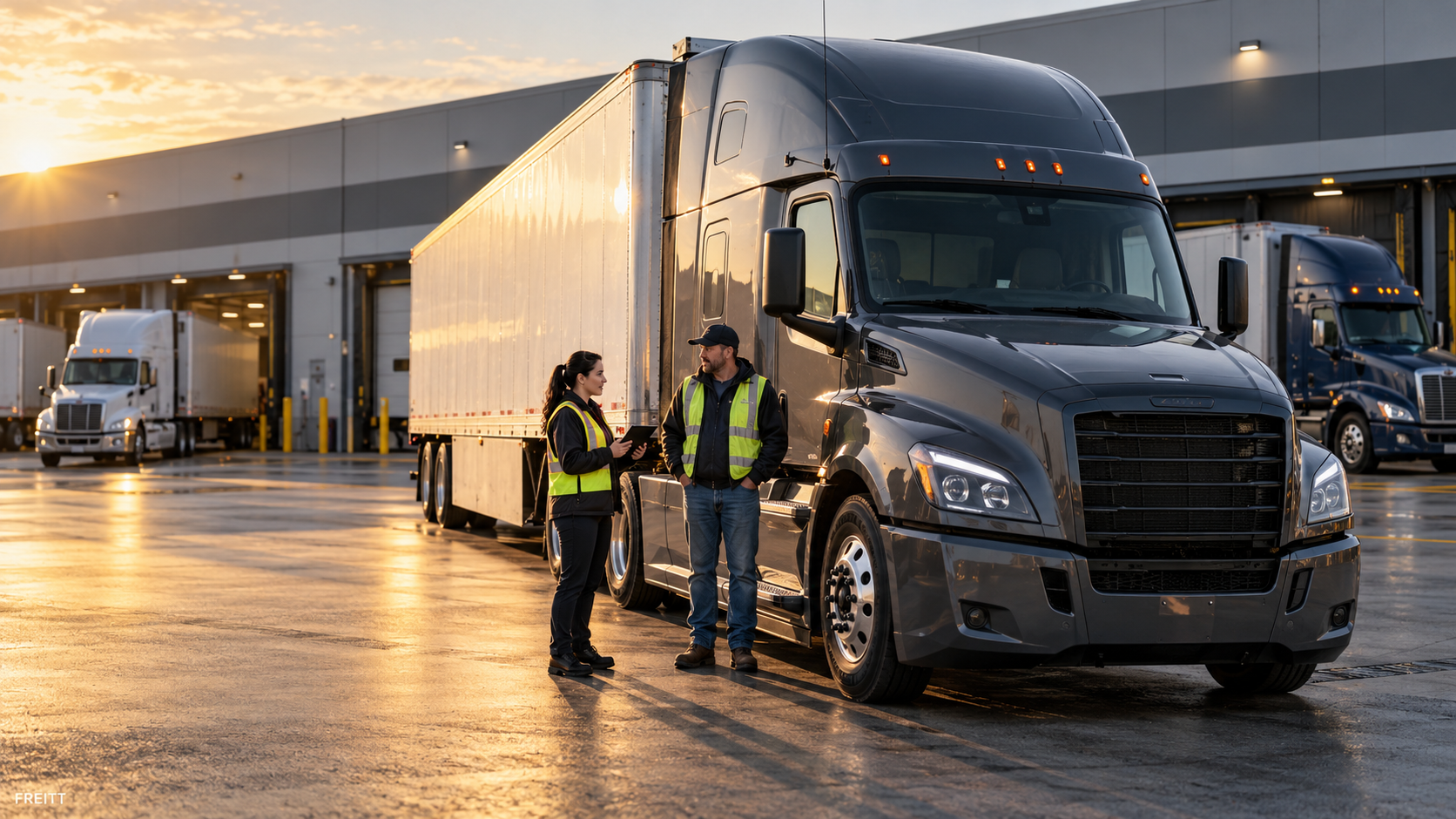
Clear shipment details and confirmed appointments help turn a trucking quote into an executable pickup.
6. Identity checks will move deeper into everyday load handling
A familiar company name on an email is not enough to establish who is arranging or collecting a load. The FBI describes strategic cargo theft methods that include identity theft, fictitious pickups, account takeovers and fraudulent carriers.
This makes verification a workflow issue for 2027. Establish how staff confirm a new counterparty, a changed contact, a substituted carrier or an unexpected delivery instruction. Give dispatchers a clear escalation route when something does not match.
FMCSA recommends checking broker and carrier phone numbers against SAFER records and calling the listed number when the supplied contact differs. Build that independent check into the process rather than relying entirely on documents attached to the request.
Automation can organize the information being checked. The business still needs a defined verification policy and someone empowered to pause a questionable transaction.
7. Connected load records will matter more than another dashboard
A quoted requirement has little value if it disappears before dispatch. The same applies when a delivery reference changes in an email but the driver receives the earlier version.
The useful technology trend for 2027 is continuity across the load: customer request, accepted quote, carrier confirmation, appointment details, proof of delivery and invoice. Each person should be able to identify the current instruction and its source.
Map one recent shipment through your existing systems. Find where staff retype addresses, copy references or search for the latest attachment. Improve the handoff with the greatest operational impact first. Use a consistent load identifier, define who owns updates and decide which system holds the authoritative record for each field.
Success should be visible in fewer corrections, faster answers and less time reconstructing what was agreed.
8. Driver experience will become a test of operational quality
For 2027 planning, driver experience belongs beside utilization and service performance. A dispatch plan that repeatedly changes without explanation, sends a driver to a closed facility or omits unloading requirements transfers office problems into the cab.
Technology decisions should account for that daily experience. Ask drivers which details they most often have to chase, which locations create avoidable waiting and which instructions arrive too late to be useful.
Then make a few specific improvements: send complete pickup instructions before departure, provide a reachable contact for exceptions and communicate appointment changes clearly. Keep load plans realistic, including safe stopping and rest needs.
Measure whether the changes reduce repeat calls and preventable disruption. A new driver app is only useful if the information inside it makes the work easier to perform.
9. Autonomous trucking will be judged by route-level execution
Autonomous trucking is already an operating development to watch. In an October 2026 company update, Aurora said it was hauling customer freight on public roads and had accumulated more than 500,000 driverless miles since commercial launch. Those are company-reported results, not a measure of adoption across the trucking industry.
The 2027 question for an operator is where a particular service fits. Evaluate the actual corridor, operating conditions, transfer points, service support and commercial terms. A highway movement also has to connect with pickup, delivery and exception handling.
Treat provider expansion plans as plans. Businesses considering a partnership should ask for evidence from comparable freight and routes, together with a clear account of what happens when the planned movement cannot proceed.
10. Fleet technology investment will follow the duty cycle
Electric and other alternative-power trucks will continue to make fleet planning more specific to the work performed. Daily distance alone does not settle the decision: payload, terrain, dwell time, energy availability, maintenance support and required productivity all matter.
NACFE's March 2026 Messy Middle Operations Report examined real-world operation across several powertrains. Its findings emphasize matching technology to operating conditions and infrastructure, and evaluating actual route performance alongside vehicle specifications.
In 2027, the stronger business case will be built around a defined assignment. Compare total operating cost and usable capacity on that assignment, including charging or fueling arrangements and downtime contingencies. Run a measured pilot before making a wider commitment. Different routes within one fleet may justify different equipment choices.
How trucking businesses can prepare for 2027
Begin with the part of the operation that creates the most repeatable loss of time or margin. For one business, that may be pricing incomplete requests. For another, it may be unconfirmed appointments or invoices waiting on delivery paperwork.
Establish a baseline. Measure quote turnaround, pricing corrections, appointment exceptions, empty miles and invoice delays where they apply to your operation.
Choose one workflow and an owner. Agree what a complete request looks like, which information must be checked and when an exception needs approval.
Run a limited pilot. Use real loads, record the edits and compare outcomes with the baseline before extending the change.
Pair speed with quality. A shorter response time is useful only if the team is quoting work it can perform at terms it understands. Review accepted quotes against completed loads so the next decision benefits from what actually happened.
Where Freitt fits in road freight quoting
For road freight teams that already work from agreed haulage sheets, Freitt helps prepare a priced quote from the incoming request. Its role sits at the commercial desk, alongside the systems used to manage transport operations.
Freitt maps existing rate sheets and excludes expired rate lines. When a valid rate is missing, it flags the gap and prepares a carrier inquiry. Customer, lane and mode margin rules, together with approval routing, are Growth-plan capabilities.
Bring one road freight request and its matching haulage sheet to a Freitt demo. Use the session to check the load details, rate basis, extra charges and review process against the way your team works.
Frequently asked questions
What are the biggest trucking industry trends for 2027?
The planning themes include uneven lane-level market conditions, cost-based pricing, AI-assisted administration, clearer accessorial terms, appointment coordination, fraud prevention, connected load records and route-specific evaluation of new truck technologies. Their importance will vary by fleet, equipment type and customer base.
Will trucking rates rise in 2027?
There is no single reliable answer for every lane. Demand, equipment availability, direction, seasonality and service requirements affect rates. Plan for several scenarios and keep quote validity aligned with the conditions your business is actually seeing.
How can AI help with trucking quotes?
AI can help extract load details from emails and attachments and prepare a draft using approved pricing inputs. A useful workflow identifies uncertainty and leaves commercial review with the team. Test it on your own requests, including incomplete details and rates that are no longer valid.
Why should accessorials be discussed before booking?
Services such as liftgate delivery, extra stops or waiting beyond agreed free time can change the cost of a job. Clear terms help both parties understand the quoted scope, the conditions for additional charges and the evidence needed if those conditions occur.
Will autonomous trucks replace conventional trucking in 2027?
A broad replacement is not the assumption businesses should use for planning. Evaluate available services against specific routes and operating conditions. Conventional fleets still need to address driver support, equipment reliability, safe operations and dependable pickup and delivery execution.
Can Freitt help with road freight quoting?
Yes, for road freight teams pricing from their own agreed sheets. Freitt prepares quotes using the applicable lane, zone or distance basis and listed charges, with a person reviewing and sending. It works alongside transport operations systems; fleet dispatch, live spot-market rate discovery and vehicle tracking require the appropriate separate tools.